Launching a lash line is a product-development project, not simply a logo-printing exercise. Before asking factories for prices, a buyer needs to define who the products are for, what performance they should deliver and which parts of the range need to be customized. A clear brief makes sampling faster, quotations easier to compare and production risks easier to control.
This guide explains the decisions a beauty brand, distributor or lash professional should make when developing a private label range with a wholesale manufacturer.
1. Define the commercial brief before choosing products
Start with the customer and sales channel. A professional salon range, an educator’s student kit and a retail-focused online brand may all need different products, packaging and price structures. Write down the target market, expected retail price, launch date, initial quantity and the problem the range should solve.
Your first brief should answer five questions:
- Who will buy or use the product?
- Which product category will lead the launch?
- Which specifications matter most to that customer?
- Do you need neutral stock, private label packaging or a newly developed product?
- What quantity and delivery window are commercially realistic?
A focused first collection is usually easier to test than a large assortment. For example, a professional extension brand could begin with several proven diameters and curls, then expand after collecting feedback from lash artists. Browse Lashestar’s lash extension collection to identify possible starting specifications.
2. Understand private label, customization and OEM/ODM
Factories and buyers do not always use these terms in exactly the same way, so define the expected work in the quotation rather than relying on a label alone.
Private label
A private label project normally starts with an existing product and applies the buyer’s brand to the label, tray, box or bottle. This route can reduce development work when the existing specification already suits the market. The buyer still needs to approve the physical product, artwork, packaging construction and final labeling.
Product and packaging customization
Customization changes selected parts of an existing product. For lash trays, this may include the curl, diameter, length mix, fiber finish, strip behavior or tray arrangement. Packaging work may include box structure, print, surface finish, inserts and labels. Each change can affect minimum quantity, sampling and timing.
OEM/ODM development
A deeper development project begins with a performance target or design requirement that cannot be met by the standard range. It may require more rounds of feasibility review, specification testing and sample approval. Ask the manufacturer to separate product development, packaging development and bulk production in the schedule and quotation.
3. Build a specification sheet that a factory can quote
“Soft black lashes in a custom box” is not enough information for a reliable quotation. A useful specification sheet converts the idea into measurable choices.
For lash extensions, include the fiber appearance, curl, diameter, lengths, single-length or mixed tray layout, number of rows, strip type and desired fan behavior. For adhesives and aftercare, include the intended user, working conditions, container size, label language, storage needs and destination market. Product claims and regulatory documents must be confirmed for the specific item and market.
Add visual references, but explain what you like about each one. A reference might show the desired black level, taper, box opening style or foil finish. This prevents the factory from guessing which feature matters.
4. Request samples and use a written scorecard
A sample should be evaluated against the same criteria that will be used for bulk production. Ask several intended users to test it when possible. Record results instead of relying on a general impression.
A lash extension sample scorecard can include:
- curl and length consistency;
- fiber softness, sheen and black level;
- taper and weight for the intended technique;
- ease of pickup and release from the strip;
- fan opening or premade fan symmetry;
- tray labeling and specification accuracy;
- packaging protection and presentation.
Keep one approved sample as the comparison standard. If revisions are needed, identify the exact difference and mark the sample version. “Make it better” is difficult to act on; “reduce the gloss and use the approved C curl reference” gives the factory a clear task.
5. Develop the brand and packaging around the product
Packaging has to protect the product, communicate the specification and remain practical for the person using it. Confirm the legal brand name, logo files, colors, label copy, barcodes and required market information before final artwork approval.
Ask for a digital proof first, followed by a physical packaging sample when the structure, print color or finish needs confirmation. Review every panel, not just the front. Product name, curl, diameter, length, quantity and batch identification should be readable and consistent with the actual contents.
Do not finalize large packaging quantities while the underlying product specification is still changing. Product, label and packing list must all use the same approved naming system.
6. Compare quotations on total project scope
The lowest unit price may exclude work that another quotation includes. Compare the product specification, neutral and branded minimums, sample cost, artwork or tooling charges, packaging, inspection, cartons and shipping terms. Confirm which costs are one-time and which apply to repeat orders.
Timing should also be divided into stages: requirement review, sample preparation, revision, artwork approval, bulk production and shipping. The production clock should start only after specifications, artwork, commercial terms and any required sample are approved.
7. Approve a production standard before the bulk order
The purchase order should reference the final specification and approved sample. Agree on how the factory will handle visual checks, specification checks, packaging checks and random sampling. Define what happens if a material or packaging component needs to change.
For a first order, ask for progress confirmation at agreed milestones. Clear communication is most useful when it records decisions, version numbers and approvals rather than creating a long stream of informal messages.
8. Prepare the launch while production is running
Use the approved sample for photography, training and sales materials. Prepare product pages, application guidance, storage information and customer-service answers before inventory arrives. Give distributors, educators or selected lash artists enough time to test the range and provide structured feedback.
After launch, track which specifications sell, which questions customers ask and which packaging issues appear in real use. Share that information with the manufacturer before the repeat order. A private label range improves through controlled revisions, not by changing several variables at once.
Questions to send with your first inquiry
- Which existing products are closest to our target specification?
- What can be customized at the sample stage?
- How do minimum quantities change for neutral, branded and custom packaging?
- Which files and label information do you need from us?
- How will the approved sample be referenced during production?
- Which quality checks and shipping options apply to this order?
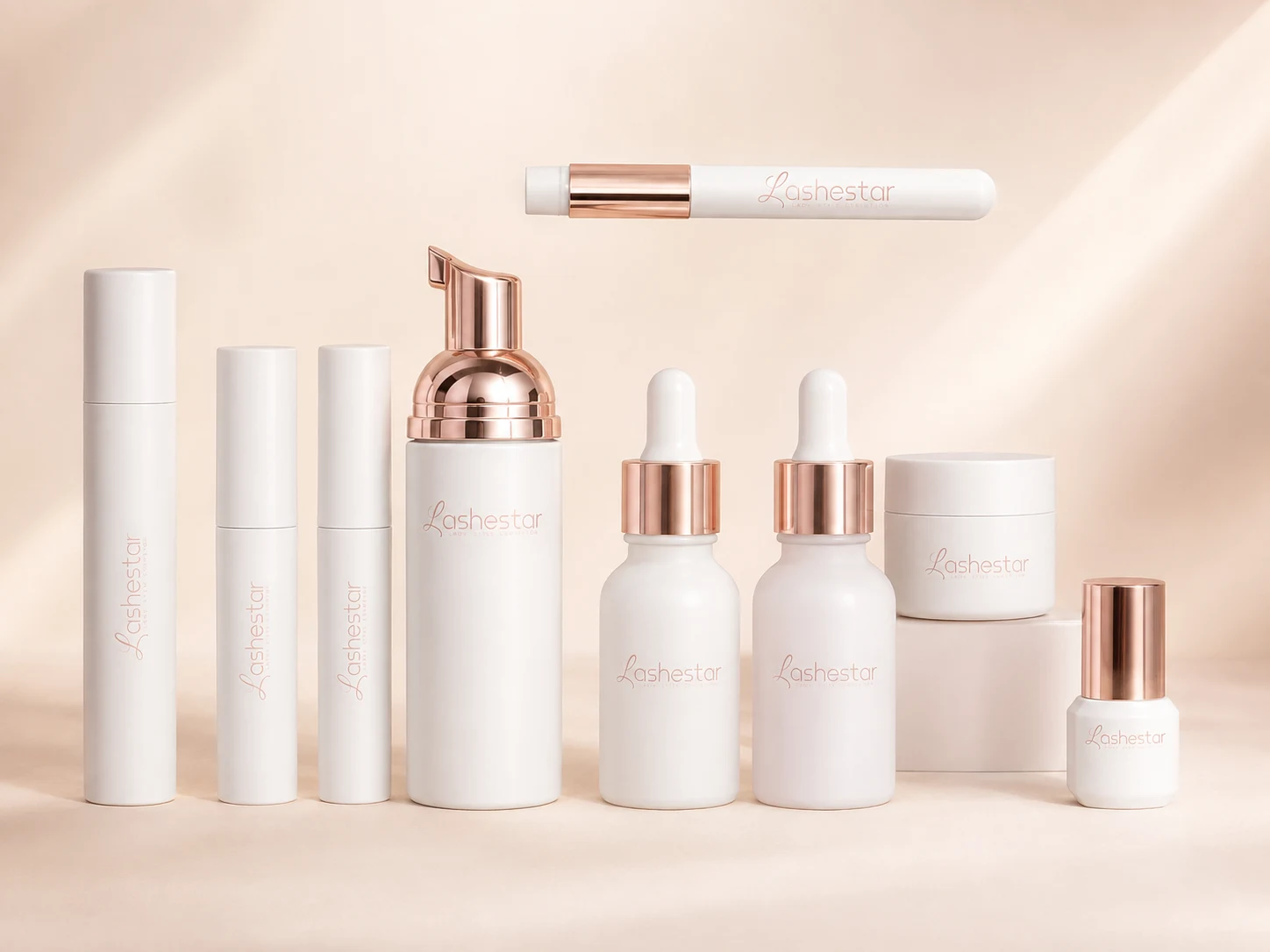
Lashestar supports lash extensions, adhesives, aftercare products, tools and related private label packaging from Qingdao, China. Send your product type, specification, quantity, target market and packaging requirement through the manufacturing inquiry form. The team will review the brief and recommend the appropriate sample and production route.