
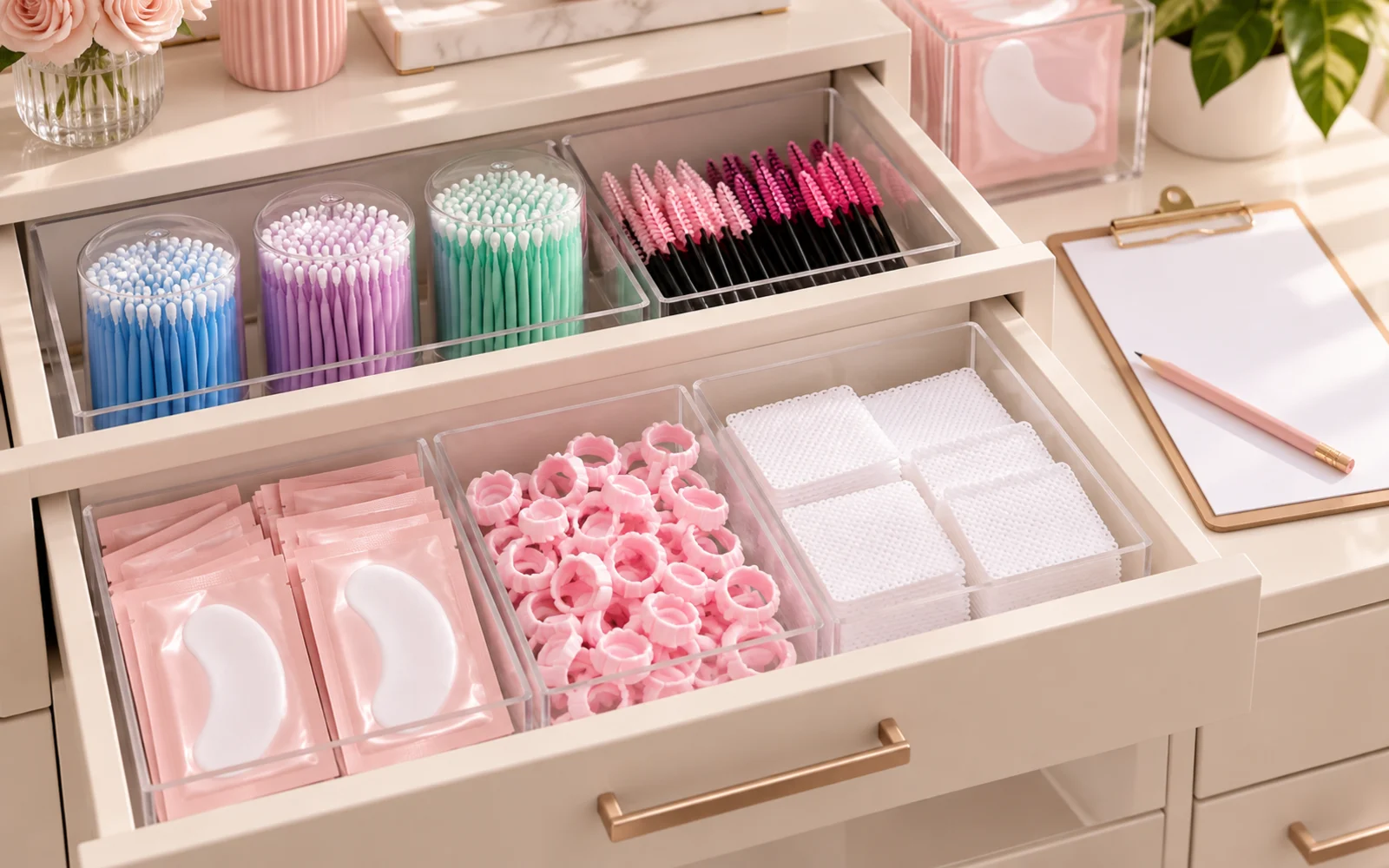
Glue rings, eye pads, wipes, wands and micro applicators are low-cost items with high operational impact. Running out interrupts appointments; overbuying unapproved packs ties up space and cash. A useful lash salon disposables checklist therefore connects each item to a service step and a reorder calculation.
Lashestar lists glue wipes, eye pads, glue rings, disposable lip wands, lash wands and micro applicator brushes within the tools collection. Confirm the current pack count, material and intended use when requesting a quote.
The core replenishment list
| Item | Service role | Approval checks |
|---|---|---|
| Glue rings | Hold a controlled adhesive drop near the workstation | Cup size, fit, stability, material compatibility and single-use instructions |
| Eye pads | Support isolation under the eye according to the professional protocol | Shape, position stability, packaging, label and user response reporting |
| Glue wipes | Support nozzle care under the adhesive instructions | Lint, absorbency, size and packaging cleanliness |
| Micro applicators | Controlled placement of specified liquids | Tip size, fiber shedding, handle rigidity and colour coding |
| Lash wands | Brush and organize lashes within the service or aftercare routine | Head shape, bristle feel, cap or pouch and single-user policy |
| Disposable lip wands | May be repurposed only where the written protocol permits | Tip material, shedding and clearly defined use |
Calculate monthly demand
Use a simple base formula: monthly services × units per service × waste factor. Then add lead-time demand and a safety buffer. Do not copy a generic “100 pieces per month” recommendation into salons with different booking volumes.
Monthly base = services per month × units used per service
Reorder point = average weekly use × supplier lead time in weeks + safety stock
Order quantity = case-pack multiple that restores target stock without exceeding storage capacity
For example, a 300-service salon using two micro applicators per service has a 600-unit base before training use, damage and buffer are added. The purchasing team should check whether the approved case pack fits the real calculation.
Separate clean stock from open stock
- Keep closed cartons in a clean, dry, identified storage area.
- Open only the working quantity needed for the station protocol.
- Use first-in, first-out rotation where shelf-life or package integrity applies.
- Do not return handled single-use items to clean stock.
- Record lot or supplier information when the item could affect service quality.
Private-label decisions
Disposable products can carry a logo on the pouch, carton or handle, but branding should not obscure count, identity, instructions or traceability. For small programmes, a branded outer carton around a standard inner pack can reduce SKU complexity. For distributors, colour coding can separate tip size or task if the system remains consistent.
| Field | Specify before quote |
|---|---|
| Product | Material, dimensions, colour and intended use |
| Unit pack | Count, pouch or container, closure and required label |
| Case pack | Inner packs per carton and shipping-mark requirement |
| Quality sample | Acceptance checks for fit, lint, shedding, shape and count |
| Forecast | Monthly usage, launch quantity, reorder point and lead-time assumption |
Connect supplies to the service system
Glue rings and wipes should be evaluated with the selected adhesive and its instructions. Applicators should match the prep or finishing liquids they are intended to place. Eye pads and wands belong in a documented workstation protocol rather than a miscellaneous drawer.
If the business wants a coordinated assortment, use the lash tray and kit guide to decide which items belong in a professional service kit, academy set or retail aftercare package.
Turn the checklist into a purchasing calendar
Count physical stock on a fixed day each week. Compare actual use with booked services and investigate large differences. Training, spills, damaged packs and product changes can all increase consumption. Update the average rather than letting the original estimate become permanent.
Group items by lead time and business impact. Eye pads, rings and applicators that stop a service deserve a higher buffer than a secondary merchandising accessory. Place orders by case-pack multiples, but do not let a supplier carton force excess inventory beyond clean storage capacity.
Buyer questions about disposable supplies
How large should safety stock be?
Base it on demand variability, supplier lead time and the consequence of running out. A stable local supply needs less buffer than an imported custom pack with variable transit. Review the figure each quarter.
Should every item carry a logo?
No. Brand the surfaces customers see or that support stock identification. Customizing every small item can increase minimums and fragment inventory without improving the service.
Can a salon substitute one applicator for another?
Only when the written protocol and product instructions permit it. Tip size, absorption and shedding change dose and placement. Treat substitution as a controlled change.
What information should be on an outer carton?
At minimum, make product identity, quantity, variant and traceability practical for receiving and stock rotation, then add any information required in the destination market.
For a replenishment quote, send Miya Chen your monthly service volume, units per service, pack sizes, branding and delivery schedule.