
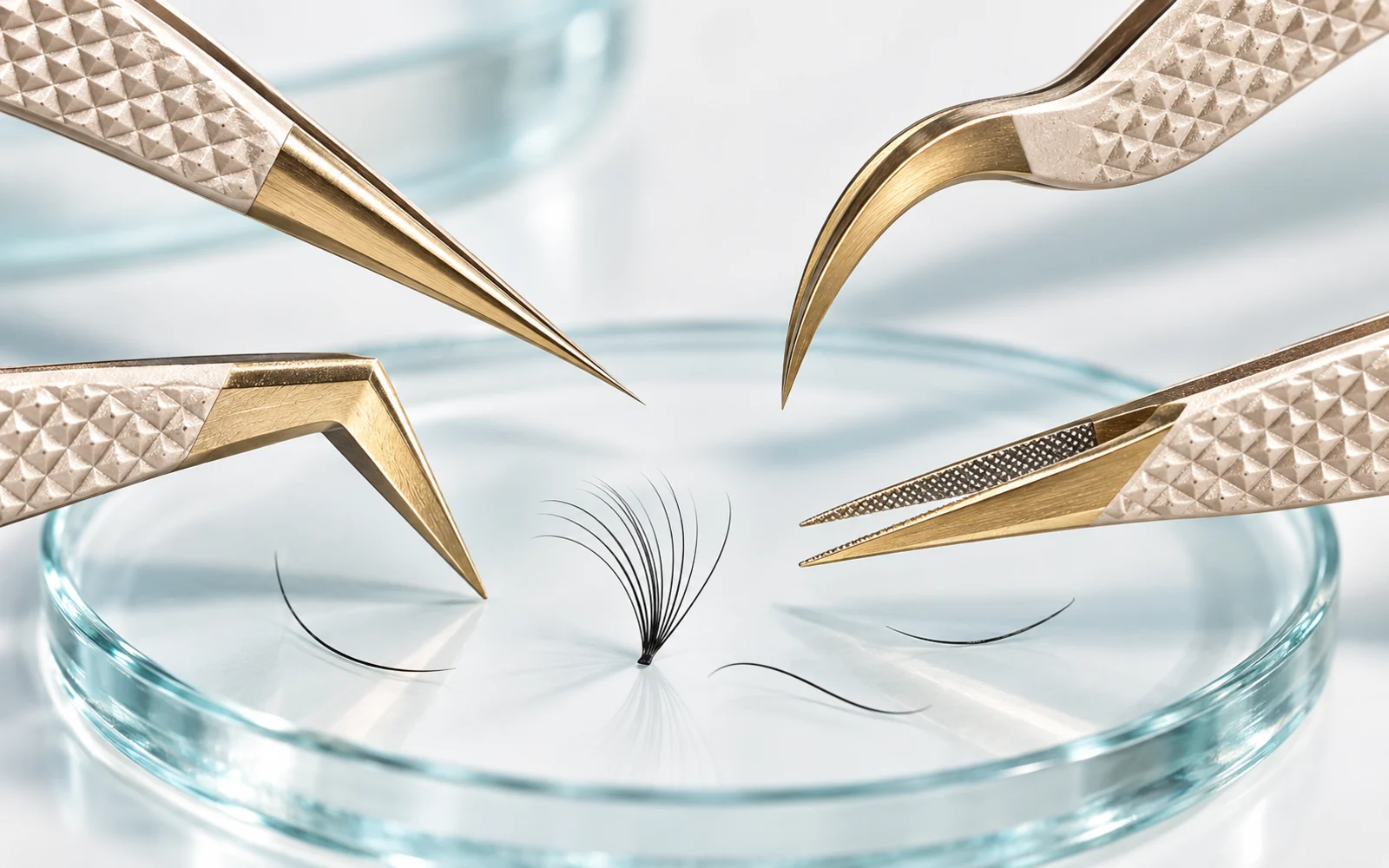
Eyelash extension tweezers are repeat-purchase professional tools, yet shape names alone do not describe how a pair performs. Two L-shaped tweezers can have different tip length, angle, tension, contact zone and balance. A wholesale buyer needs a task-based sample test.
The current Lashestar tools collection includes Fiber Tip Tweezers and Master Pro Tweezers. These are useful starting families for private-label or wholesale discussion. The final shape, finish and grip must be approved from a production-representative sample.
Map the tweezer to the task
| Tip family | Common task direction | Sample checks |
|---|---|---|
| Straight | Isolation and precise access in a familiar line | Visibility, tip fineness, natural hand angle and full closure |
| Curved | Isolation or pickup where an offset improves access | Curve depth, working distance and whether the tip blocks the view |
| L shape | Volume fan work and pickup along a defined foot | Angle, boot length, grip zone and fan release |
| S shape | Directional pickup or isolation depending on geometry | Hand orientation, contact area and access at different service positions |
| Fiber-textured tip | Added surface grip for certain fan-making and pickup methods | Texture consistency, lash marking, cleaning and release behaviour |
These are selection directions, not fixed rules. Artists use different hand positions and techniques. Build a tester group that represents the customer base rather than relying on one buyer’s preferred pair.
The grip zone matters more than the label
The grip zone is the part of the tip that closes evenly enough to hold the intended fiber or fan. Mark that zone during evaluation. A narrow sweet spot may feel precise to an experienced artist but frustrate a training market. A wider zone can support repeatability, provided the tips remain aligned.
- Check closure against a light background from several angles.
- Test single-fiber isolation and the intended fan-making methods.
- Record hand fatigue after a representative working period.
- Check release as well as pickup; excessive grip can disturb placement.
- Repeat after the approved cleaning and disinfection procedure.
Steel, coating and finish
Ask the supplier to identify the base material and surface treatment. A coloured coating is a visual and tactile decision, but it must not hide rough edges or uneven closure. Test how the finish responds to the cleaning and disinfection method required by the salon’s local rules and the tool instructions.
For a private-label line, keep the logo area away from the working surface and measure its position on the approved drawing. Packaging should protect the tips in transit and allow the buyer to identify the shape without opening every unit.
Create a small range with clear jobs
| Range role | Suggested brief | Buyer story |
|---|---|---|
| Isolation | Straight or gently curved precision tip | Visibility and controlled separation |
| Classic pickup | Fine pickup tip with comfortable tension | Accurate single-fiber handling |
| Volume | L, boot or selected curved geometry | Defined grip zone for the intended fan method |
| Grip alternative | Fiber-textured tip in an approved shape | Different surface feel for buyers who prefer it |
Four meaningful tools usually tell a stronger B2B story than many shapes with no defined role. Add a shape only when it serves a distinct technique, hand preference or price position.
Receiving inspection
- Confirm product code, tip geometry, finish, branding and protective package.
- Inspect tip alignment and visible surface defects under consistent light.
- Compare closing pressure with the retained sample.
- Test the documented grip zone using the same representative fibers.
- Record failed units by lot and agree an acceptance method before bulk production.
Tweezers are only one part of the workstation. Use the salon disposables checklist to define replenishment stock, and the tray and kit guide to create professional assortments without mixing incompatible user channels.
Run a blind sample evaluation
Code the tweezers so testers are not influenced by finish or supplier name. Give each artist the same fibers and tasks: isolation, single pickup, the selected fan methods, placement and controlled release. Use a five-point score for visibility, closing pressure, grip zone, balance and fatigue. Collect comments only after the scored work is complete.
Then inspect the best-scoring pairs across a larger production sample. Measure consistency rather than choosing the single perfect pair. Agree how bent tips, surface defects, misalignment and outlying tension will be handled in receiving inspection.
Buyer questions about lash tweezers
Are fiber-tip tweezers always better for volume?
No. The textured surface can provide a grip feel some artists prefer, but tip geometry, alignment and technique still matter. Test release and cleaning as well as pickup.
Which shape should a beginner kit include?
Match the tool to the academy’s curriculum. A straightforward isolation pair and one pickup pair with a forgiving grip zone often create a clearer training set than several advanced shapes.
Can one pair be marketed for every technique?
A versatile pair may cover several tasks, but avoid a universal claim unless testing supports it. Clear task descriptions help buyers choose and reduce returns.
What should the protective package do?
It should keep tips from impact and prevent movement in transit. It should also identify shape, finish and product code without forcing the warehouse or customer to handle the working tip.
For a tweezer sample set, send Miya Chen the technique, preferred hand angle, finish, branding, quantity and package requirement.