Eyelash glue remover is a professional service product used close to a delicate area. The buying decision must cover control, packaging, instructions and documentation, not only how quickly a sample appears to break down adhesive.
Lashestar currently lists professional, wholesale, cantaloupe and grape remover product directions in the tools and salon supplies collection. Fragrance names help organize a range, but they do not establish performance or safety. Request the current formula documents and test the exact product with the adhesive system it is intended to remove.
Cream remover vs gel remover
| Format | Operational characteristic | Buyer checks |
|---|---|---|
| Cream | Thicker placement can help a trained professional keep product localized. | Consistency across temperature, dispensing control, residue removal and closed-eye instructions. |
| Gel | Lower viscosity can spread more readily and may suit a different working preference. | Migration control, pack opening, dose consistency and compatibility with the service protocol. |
Neither format is universally superior. A buyer should compare how reliably a trained technician can place, monitor and remove it according to the manufacturer’s instructions. The same test should use the same cured adhesive, application amount and timing method.
What a professional removal protocol must define
This article is a procurement guide, not a do-it-yourself removal tutorial. Removal around the eye should be performed by a trained professional following the exact product instructions. The written protocol should define client positioning, eye closure, isolation, permitted tools, contact control, removal check, cleansing and the action to take if discomfort occurs.
- Professional-use statement: make the intended user and setting clear.
- Application boundaries: state where the product may and may not be placed.
- Timing: use the formula-specific instructions rather than a generic internet time.
- Rinsing or cleansing: describe how residue is removed under the approved protocol.
- Incident response: include label directions and access to appropriate medical guidance.
Packaging is part of control
Test the jar, tube or pump as part of the product. A wide opening can expose more product to air and tools. A narrow nozzle can support smaller dispensing, but must remain usable at the formula’s viscosity. Check closure torque, liner compatibility, leakage after transport and whether the label remains legible when handled with gloves.
| Approval item | Evidence to retain |
|---|---|
| Formula | Product code, ingredient information, current SDS and supplier specification |
| Compatibility | Test record against the adhesives named in the brief |
| Package | Filled pack sample, leakage test and dispensing observations |
| Instructions | Final market-language copy approved before printing |
| Claims | Evidence and regulatory review for each target country |
| Bulk order | Lot number, incoming sample and comparison with the approved standard |
Range architecture for wholesale buyers
A distributor does not need four near-identical removers merely because four labels exist. Separate the range by a meaningful difference such as format, pack size, dispensing route or verified formula property. Fragrance variants can sit under one functional specification when the underlying formula and compliance review support that structure.
For private label, define whether the customer is a salon professional, educator, distributor or consumer aftercare buyer. Professional adhesive remover should not be placed into a retail kit with instructions that imply unsupervised use around the eye.
Incoming quality checks
- Match the product code and lot to the purchase specification.
- Inspect fill, seal, closure, label and transport leakage.
- Compare colour, odour and viscosity with the approved retained sample.
- Run the written compatibility test on the defined adhesive system.
- Quarantine a lot when the identity, package or performance does not match.
After removal, the service protocol may use a compatible cleanser. The lash shampoo guide explains how to specify a residue-controlled cleansing range. For the preparation and finishing stages of an extension service, continue to the primer, bonder and sealant guide.
Safety reference
The FDA’s Eye Cosmetic Safety guidance emphasizes the sensitivity of the eye area and the need to check ingredients and follow label directions. Use the current requirements of every market in which the product will be sold.
How to compare four catalogue directions
Use the professional and wholesale remover directions as functional starting points, then decide whether cantaloupe and grape belong as fragrance variants. Ask whether all four use the same base format and pack or whether any formula, viscosity or instruction differs. If the only difference is fragrance, keep the range architecture honest and avoid inventing performance tiers.
Create one test panel with at least two approved adhesives, including the slowest product to release under the intended protocol. The goal is controlled, repeatable handling. Record dose, localization, the formula-specific wait, residue removal, package contamination and technician feedback. Do not compare products by deliberately extending contact beyond their instructions.
Buyer questions about lash remover
Is cream remover automatically safer than gel?
No format can carry a universal safety guarantee. Cream may offer more localized placement in a particular protocol, while gel may suit another trained user. Formula, instructions, dose control and technician practice remain decisive.
Can a remover be sold as an at-home product?
Do not infer consumer suitability from the pack size or scent. Determine the product’s intended user, destination-market rules, label and instructions. Professional-only products should remain in the professional channel.
Should fragrance lead the product name?
Fragrance can support merchandising, but the front label should still identify the product clearly. The buyer also needs the formula code, lot, contents and required warnings. A pleasant name does not replace product identity.
What belongs in a remover kit?
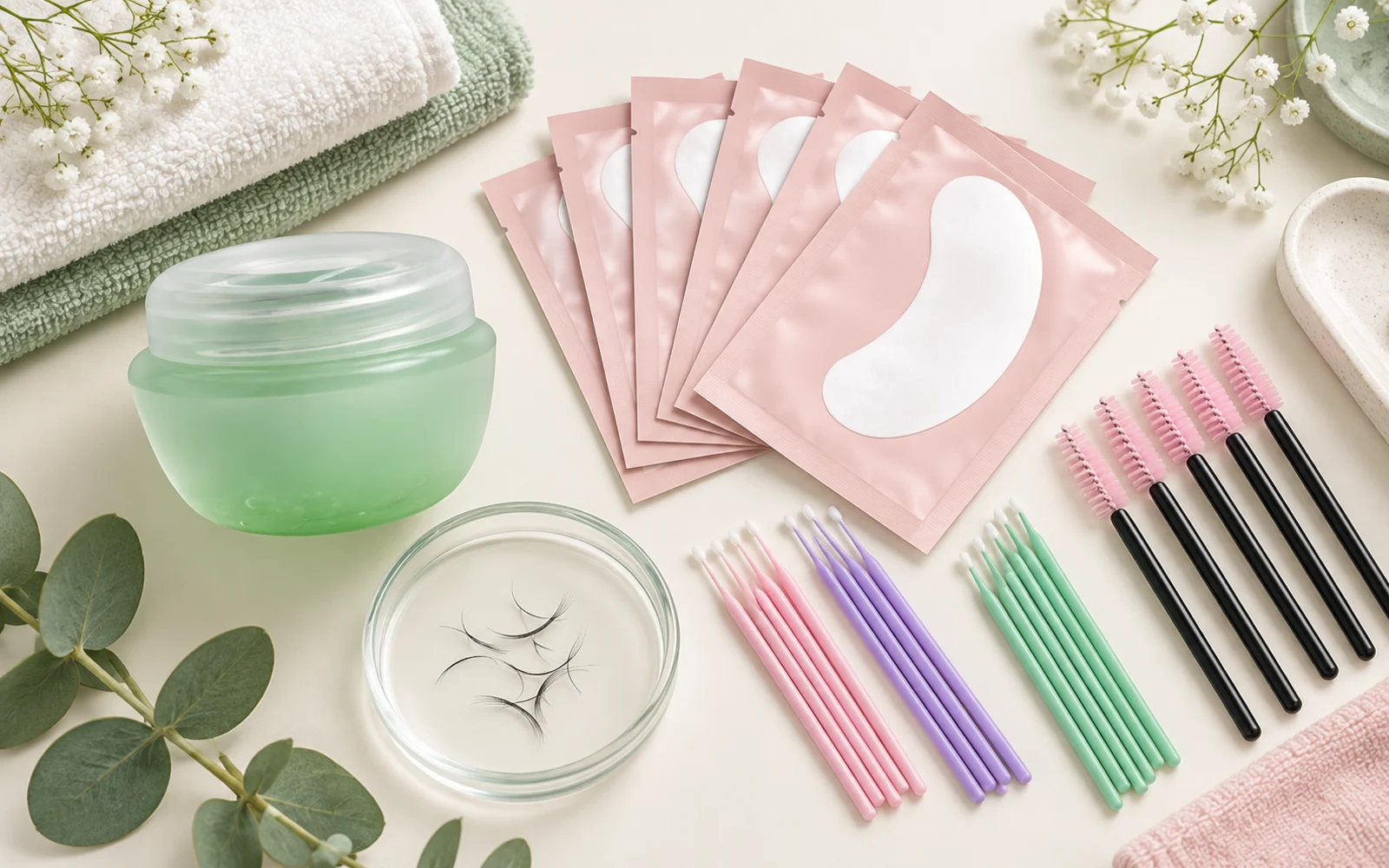
For a professional kit, include only verified compatible supplies and the complete protocol. Eye pads, micro applicators and cleansing products need their own specifications. Avoid loose accessories that encourage an unapproved method.
To compare remover formats and private-label packaging, send Miya Chen the adhesive system, professional channel, pack size and destination market.