
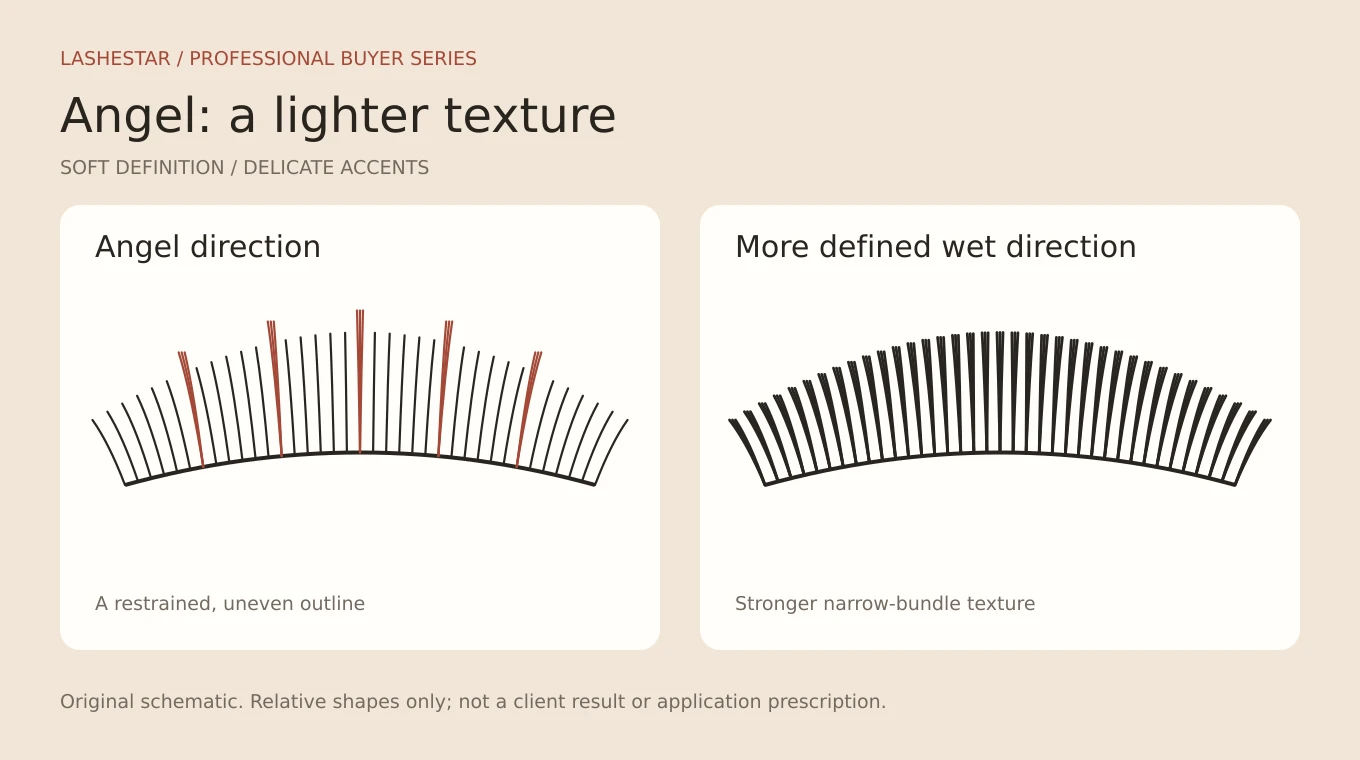
Angel lashes describe a light, softly textured extension look with delicate definition and an intentionally uneven finish. The name is not a standardized technical category. In current professional education, it is commonly discussed alongside lighter wet-look and wispy styling rather than defined by a compulsory mixture of curls.
For a brand or salon buyer, the useful brief is the visible result: how airy the base should remain, how pronounced the points should be and which components reproduce the approved reference. Mixed curls can be an option, but they are not a substitute for specifying texture and construction.
What makes the Angel direction recognizable?
The aim is a restrained textured effect rather than a dense, uninterrupted fan silhouette. Delicate accents remain visible while the overall impression stays soft. There can be overlap with wet-look, wispy and classic-inspired references, so ask the customer which features matter in the image she has selected.
London Lash’s Angel lashes guide describes a lighter wispy interpretation of wet-look techniques using narrow components. That is a helpful reference for the terminology. It should not be turned into a universal promise about retention, lash strength or suitability.
Angel, wet look and wispy compared
| Name | Primary emphasis | What to clarify in a sample brief |
|---|---|---|
| Angel | A softer, airy textured impression | How light the base should look and how delicate the accents should be |
| Wet look | Defined narrow-bundle texture | Bundle width, separation and desired intensity |
| Wispy | Visible variation in the upper outline | Accent contrast, distribution and supporting texture |
These categories overlap rather than functioning like mutually exclusive technical standards. A salon may describe an Angel service as a light wet set; another may emphasize its wispy appearance. Agree the reference and component list instead of treating the name as sufficient ordering information.
The wispy and wet-look guide explores the texture distinction. Use the main styles guide when the brief also needs a decision about method or eye map.
Choose the silhouette separately
A soft textured finish can be arranged around central emphasis, outer emphasis or a balanced outline. Ask which shape the client wants before selecting the component assortment. “Light and natural” may refer to density, length, colour or the absence of strong points; those are different requests.
For a salon group, record a simple base map and annotate the accent zones. The trained artist must adapt the actual specifications to the individual. A map library supports communication, but it does not replace that assessment.
If central emphasis is desired, read the doll lash guide. If the client wants prominent graphic points instead, compare the anime direction before calling the result Angel.
Mixed curls are an optional design variable
A brand may test one curl family first, then compare a second curl in selected accent or transition areas. That comparison can reveal whether the additional variation serves the reference or merely makes the assortment more complicated. Keep the length plan unchanged during the comparison when practical so the team can identify what changed.
An illustrative sample matrix could compare an approved C-family base on its own with the same base plus a separately approved CC-family accent. This is a purchasing experiment, not a treatment recipe. The letters need physical samples because their geometry is not identical across suppliers.
Document the selected curl relationship in the pack guide. Do not write “mixed curl equals Angel” on the label: the finished texture still depends on the components, placement and individual. The curl specification series provides the deeper comparison framework.
Translate softness into observable criteria
“Soft” can refer to tactile feel, visual density, finish or the transition between lengths. A sample approval needs to distinguish those meanings. Ask testers whether the reference requires fine definition, a less glossy appearance, smaller accents or more visible space in the outline.
Write an acceptance note for each criterion. For example, the appearance review may require the accents to remain identifiable without dominating the outline. The handling review may assess pickup and component stability. These notes make the decision clearer than a single overall rating called softness.
Keep the approved reference photograph and the retained product together. A later batch can match the nominal diameter and still differ in finish or curl appearance. The complete record helps the buyer explain the difference without relying on memory.
Build a focused sample assortment
Begin with the base lengths used by the intended salons, the accent components needed for the reference, and the short sizes required for transitions. Add a second curl only where the pilot supports it. The goal is a range that can be understood and reordered clearly.
Where finished fans are proposed, specify their count, spread and base. Where individual fibers are proposed, identify the product format and intended professional workflow. The word Angel does not tell a supplier which of these is required.
Review the pack layout with testers. A mixed tray should make the length allocation readable, and a finished-fan pack should state its usable count. Separate a starter assortment from the replenishment packs if the consumption pattern justifies it.
Test the range with the intended customers
- Select one authorized reference for the desired soft texture.
- Describe the base, accents and silhouette independently.
- Code the samples and record their complete specifications.
- Collect feedback from trained users on appearance and handling.
- Compare results in consistent viewing conditions.
- Record usage by size before finalizing the stock mix.
Do not extrapolate a universal result from a single successful sample. A supplier approval establishes the component and pack; the professional still chooses its use for each client. Marketing should reflect that distinction.
Positioning an Angel range honestly
The name can help customers recognize an aesthetic direction, but the product page should explain what is supplied. Show the actual fibers or fans, the tray layout and the available specification options. Use the finished-look image to illustrate the intended effect rather than replace the specification.
Avoid claiming that the style automatically lasts longer, suits every eye or creates no damage. Those statements are not established by the style name. Clear component descriptions and a professional-use brief are more useful to a B2B buyer than sweeping performance language.
For private label, keep the ordering code stable and version the pack contents if the allocation changes. A salon should not discover that its familiar Angel mix contains different lengths only after opening the replenishment shipment.
Questions about Angel lashes
Are Angel lashes just classic lashes?
The visual direction can resemble light individual definition, but the style name does not specify a classic-only method. Confirm the actual construction and intended service rather than inferring them from the finished photograph.
Must an Angel set use several curls?
No. Curl mixing is one possible design choice. The defining request is the light textured effect, which must be agreed through a reference and professional sample evaluation.
Are Angel lashes always shorter?
There is no universal length rule in the name. Choose the actual sizes through individual assessment, then order the components needed for the approved service range.
What should a brand request first?
Request a small component sample matrix with clear specifications and pack options. Compare it with the target reference before expanding the range. Browse lash extension products and send Lashestar the written brief for a sample discussion.